iPhone vs Android
iPhone vs Android is a never-ending debate. Everyone has an opinion. Some people prefer Apple, while others never think about leaving Android. The real question is not simply which one is better, but which one is better for you.
Both platforms offer excellent features, but neither is perfect. Each has strengths and weaknesses, and the right choice depends on your priorities.
iPhone vs Android: Which Is Better?
Android vs. iPhone is a debate with arguments on both sides. The better option depends on your preferences. Let’s look at the factors that matter when choosing your next phone.
1. Global Market Share and Ecosystem Lock-In
According to the figures in this article, in Q2 2026 Android accounted for 75% of global smartphone sales, Apple’s iPhone for 20%, and Huawei’s HarmonyOS for 5%. These figures vary by region.
| Region | Android | iOS | HarmonyOS |
|---|---|---|---|
| Global | 75% | 20% | 5% |
| United States | 49% | 51% | — |
| China | 58% | 18% | 24% |
| India | 91% | 9% | — |
iPhone vs Android Market Share 2025
In 2025, Android held the majority of the global smartphone market. The article reports Android’s share ranging from 72% to 79% across the four quarters, while iOS ranged from 17% to 24%. Apple reportedly sold 10% more iPhones than in 2024 and captured 20% of global smartphone sales for the year. Samsung followed with 19%, and Xiaomi held 13%. In Q4, Apple reached 25%, while Samsung had 17%.
iPhone vs Android Market Share 2026
The article reports Android at 73% of global smartphone sales in Q1 2026 and 75% in Q2. iOS accounted for 22% in Q1 and 20% in Q2, while HarmonyOS held 5% in both quarters. In the US, iOS led at 51%; in China, Android held 58%, HarmonyOS 24%, and iOS 18%; in India, Android held 91% and iOS 9%.
What Can iPhones Do That Androids Can’t?
Apple’s ecosystem is a major reason people stay with iPhone. iMessage, AirDrop, and Apple Watch features work especially well within Apple’s products. Moving photos, messages, apps, and habits to another platform can take effort, making switching less appealing for some users.
2. Hardware, Price and Variety
| Category | Android | iOS (iPhone) |
|---|---|---|
| Price range | $100–$2,000+ | ~$599–$1,600+ |
| Variety | Hundreds of models, including foldables | Curated lineup |
| Chipset examples | Snapdragon, Exynos, and others | Apple A-series |
| Charging | Some models offer 100W+ wired charging | Charging speed varies by model |
| Battery | Some models use large silicon-carbon batteries | Battery capacity varies by model |
| Foldables | Multiple models and designs available | Availability depends on current lineup |
Android’s Advantage: Choice and Value
Android offers devices across a broad range of budgets, including affordable phones and foldables. Google focuses heavily on software, while manufacturers such as Samsung also compete through hardware and camera features.
iPhone’s Model: A Curated Premium Experience
Apple offers a more tightly controlled lineup with a consistent design language. Its hardware and software are designed together for a polished experience.
The Hardware Verdict
- Performance: iPhone A-series chips are known for strong performance and efficiency. Android phones may offer more RAM, and everyday results depend on the specific models.
- Battery and charging: Some Android flagships offer faster charging and larger batteries.
- Camera: iPhones are often praised for natural photos and video. Android flagships offer creative editing tools and competitive zoom capabilities.
3. Software, Updates and Long-Term Experience
| Category | Android | iOS |
|---|---|---|
| Update policy | Up to 7 years on some flagships | Long-term support across supported models |
| Update rollout | Varies by manufacturer | Supported devices generally update together |
| Interface | Customizable (such as One UI and Pixel UI) | Curated, consistent interface |
| Key strength | Freedom and flexibility | Consistency and support |
iOS: Consistency and Timeliness
Apple’s unified update model means supported iPhones generally receive major updates at the same time, helping maintain a consistent experience.
Android: Fragmentation vs. Improving Support
Android updates are decentralized. Google and Samsung offer long support periods on selected devices, but rollout timing and update eligibility depend on the manufacturer and model.
4. Customization, Flexibility and Openness
| Feature | Android | iOS |
|---|---|---|
| Launchers and themes | Extensive third-party customization | Customization options are more limited |
| Sideloading | Supported, subject to settings and safeguards | Availability varies by region |
| Default apps | Broad control | Supported default-app options |
| File management | More open file access | More app-centered file access |
Android: Freedom to Tinker
Android users can choose launchers, icon packs, themes, default apps, and other ways to change how their phone looks and behaves.
iOS: A Polished, Walled Garden
Apple takes a more selective approach, prioritizing consistency and security. Customization and app-installation options remain more restricted, although some capabilities vary by region.
5. The Apple Ecosystem: The “It Just Works” Factor
| Feature | Apple ecosystem | Android/Google ecosystem |
|---|---|---|
| Integration | Continuity, AirDrop, Handoff | Improving connections across devices |
| Key devices | Mac, iPad, Apple Watch, AirPods, Apple TV | Windows PCs, Android tablets, Wear OS watches |
| Services | iMessage, FaceTime | Google services, including Gemini |
| Best for | People with multiple Apple devices | People who mix devices and services |
Apple’s integration is a strong selling point. Continuity, AirDrop, and iMessage make moving between Apple products convenient. Android and Google services work across a broad range of devices, which can suit people who prefer a mix of hardware.
6. Privacy, Security and AI
| Category | Android | iOS |
|---|---|---|
| Security model | Google Play Protect and user safeguards | Centralized App Store review and platform safeguards |
| Malware risk | Sideloading can add risk | Restrictions can reduce some risks |
| Ad tracking | Advertising ID controls | App tracking permission prompts |
| Anti-theft | Protection features vary by device | Stolen Device Protection on supported devices |
| AI assistant | Gemini and other options | Siri and Apple Intelligence features where supported |
Which Is Safer, iPhone or Android?
iOS is often considered more restrictive because of Apple’s closed ecosystem and App Store policies. Android also has platform-level protections, including Google Play Protect, but users should be cautious with apps installed from outside trusted sources. Security depends on device, updates, settings, and user behavior.
Privacy Comparison
Both platforms take different approaches to privacy. iOS uses App Tracking Transparency to ask permission before supported apps track users. Android offers permissions and security tools, with some features varying by device and manufacturer. Review app permissions and keep your phone updated whichever platform you use.
AI Assistants
Google Gemini offers flexible creative and assistant features on Android and other platforms. Apple’s AI features are designed to integrate into supported Apple devices and apps. Availability and capabilities vary by device, language, and region.
How Many iPhone vs Android Users Worldwide?
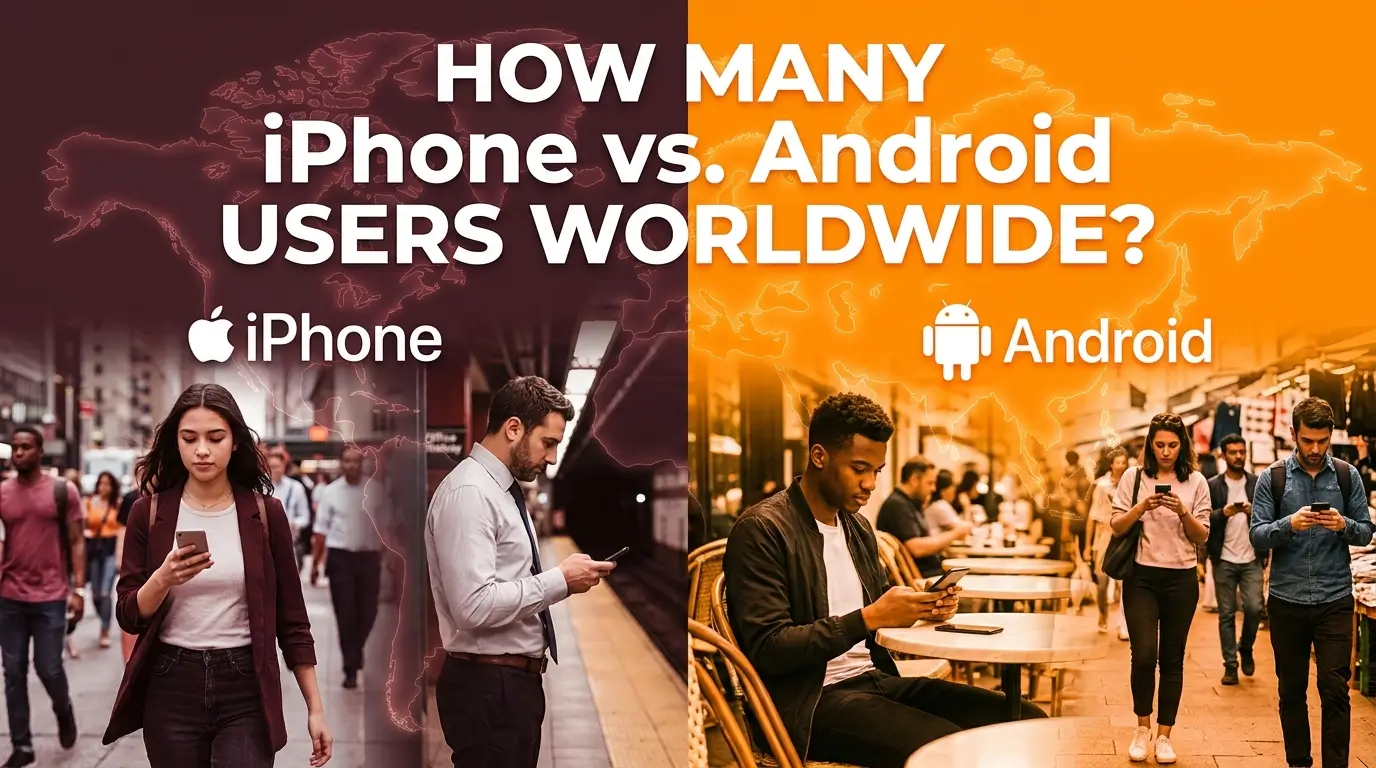
The source article estimates around 3.9 billion active Android users and roughly 1.8 billion iPhone users worldwide. These are estimates, and user counts can vary depending on the source and how an active user is defined.
| Platform | Estimated active users worldwide |
|---|---|
| Android | ~3.9 billion |
| iPhone (iOS) | ~1.8 billion |
Android leads in total users, while Apple has a large and loyal user base. The best choice still depends on your needs and the devices you already own.
iPhone vs Android: Pros and Cons
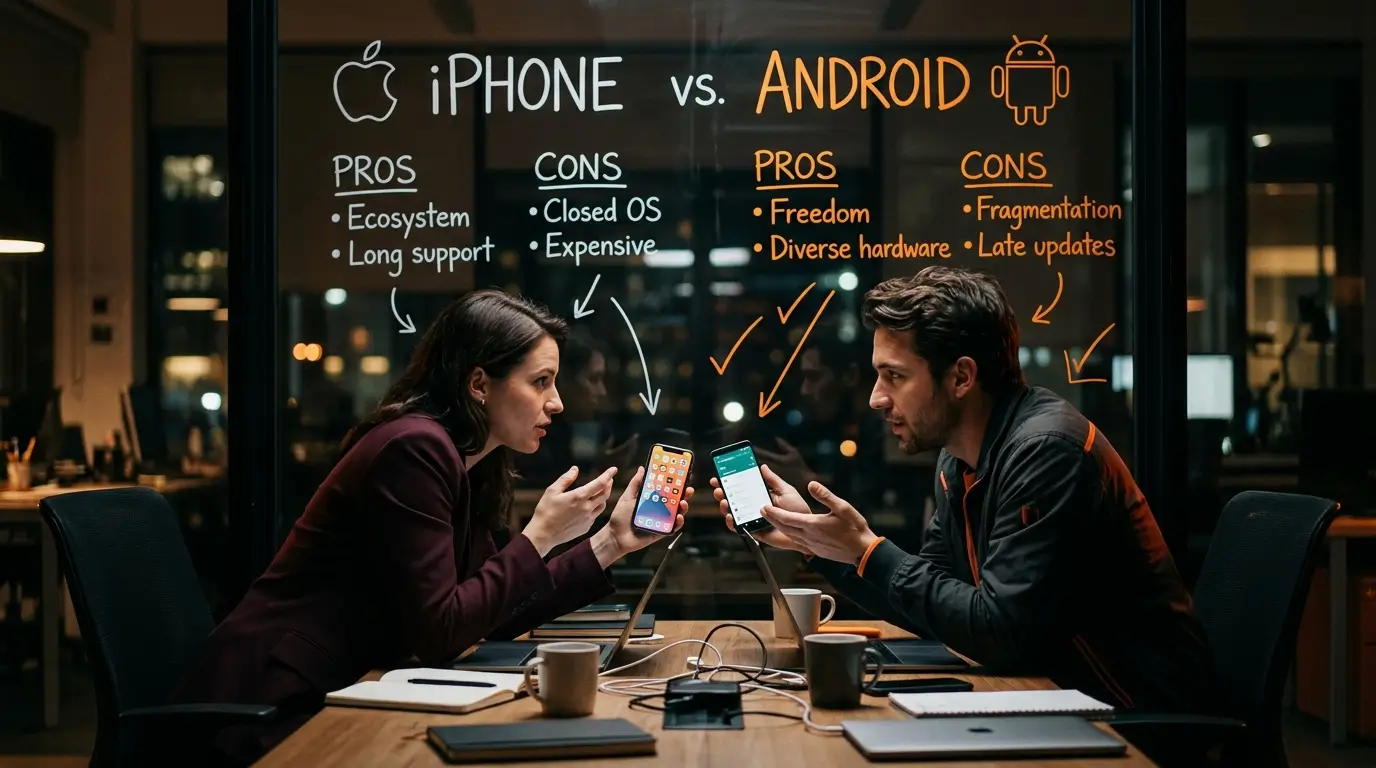
| iPhone (iOS) | Android | |
|---|---|---|
| Pros | Long software support, smooth performance, strong privacy controls, seamless ecosystem | Wide price range, deep customization, fast charging on some models, hardware variety |
| Cons | Often expensive, more restricted ecosystem, limited customization, charging speed varies | Updates can be fragmented, experience varies by manufacturer, sideloading can increase risk |
iPhone (iOS) Pros
1. Long and consistent software support
Supported iPhones receive updates together, and many models receive years of software support.
2. Smooth and optimized performance
Apple controls both hardware and software, helping it optimize performance across its lineup.
3. Strong privacy and security
App permissions and tracking prompts give users more control over certain data uses.
4. Seamless ecosystem integration
Mac, iPad, Apple Watch, and AirPods can work together through features such as AirDrop and Handoff.
5. High resale value
Many iPhones retain resale value well compared with many competing phones, though condition and market affect prices.
iPhone (iOS) Cons
1. High price
New iPhones are generally positioned in the mid-range and premium segments, rather than the lowest-budget category.
2. Limited customization
iOS offers customization, but generally less freedom than Android for launchers and system-wide changes.
3. Ecosystem lock-in
Switching can be inconvenient for people who rely on iMessage, FaceTime, or Apple Watch features.
4. Charging speed
Some Android phones charge faster, although exact speeds depend on the models and chargers being compared.
5. Fewer hardware choices
Apple has a smaller, more curated lineup than the many Android manufacturers combined.
Android Pros
1. Huge range of prices and choices
Android phones range from affordable models to premium flagships from brands such as Samsung, Google, OnePlus, and Xiaomi.
2. Deep customization
Launchers, icon packs, themes, and default-app choices offer flexibility.
3. Faster charging and bigger batteries
Some Android models support very fast charging and large-capacity batteries.
4. More hardware variety
Android includes many form factors, including foldables and phones at different price points.
5. Flexible AI tools
Gemini and other AI tools provide creative and assistant features, depending on device and availability.
6. Open file system
Android generally provides more direct access to files and folders than iOS.
Android Cons
1. Updates vary
Update timing and support length vary across brands and models.
2. Malware risk
Installing apps from untrusted sources can increase security risks.
3. Inconsistent quality
Because many manufacturers make Android phones, hardware, software, and update experiences vary.
4. Ecosystem integration
Integration can be excellent within particular device families, but the experience varies across brands.
5. Resale value
Many Android phones depreciate quickly, although resale value depends on brand, model, condition, and market.
The Verdict: Which Is Right for You?
There is no single winner in the Android vs. iPhone debate. If you want a polished, consistent experience and already use Apple devices, an iPhone may suit you. You may pay more and have fewer customization options.
Android offers more choice, flexibility, and options for different budgets. It can also offer faster charging and more hardware variety, though update support and the overall experience depend on the manufacturer and model.
Choose the phone that fits your budget, everyday needs, preferred apps, privacy expectations, and other devices. Compare specific models rather than relying only on platform labels.
FAQ’s: Frequently Ask Questions
Q1. Why does Gen Z prefer iPhone?
The source article attributes iPhone popularity among Gen Z to social belonging, status, peer influence, and the Apple ecosystem. The stated teen-ownership figure should be checked against a current source before relying on it.
Q2. Which is the world’s No. 1 phone?
Rankings vary depending on whether the comparison measures shipments, sales, or active devices. The source article says Apple and Samsung were tied at 21% of global shipments in Q1 2026, with Apple technically ranked first.
Q3. Do billionaires use iPhone or Android?
Both. Device preferences vary by person and can change over time.
Q4. Are iPhones losing popularity?
The source article says Apple’s global share increased from 17% to 20% in Q2 2026 and reports high user loyalty. Market trends vary by region and measurement.
Q5. Which celebrities don’t use iPhones?
The source article names Christopher Nolan, Dolly Parton, and Ed Sheeran, but those claims should be independently verified before being treated as current facts.